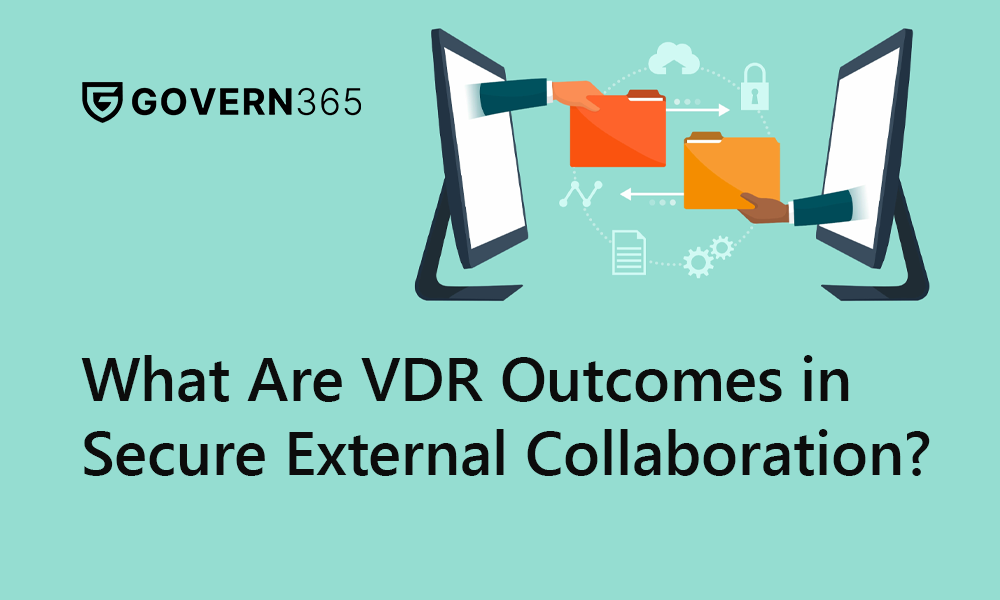
A virtual data room that sits idle after one deal closes is a wasted investment. Yet most organizations treat secure collaboration tools as disposable products, something you buy for a single transaction, then shelve until the next crisis hits. That pattern creates security gaps, inflated costs, and a fragmented approach to handling sensitive information.
The smarter approach reframes the concept entirely. Instead of purchasing a product you activate once, you build a secure collaboration capability that persists across your organization’s workflows. This shift from product to outcome changes how teams share confidential documents, manage compliance obligations, and protect data sovereignty over time.
The Product Mindset vs. the Outcome Mindset
Traditional virtual data room vendors sell access to a platform. You pay per page, per gigabyte, or per user seat. The implicit promise is simple: upload your files, share them securely, close the deal, and walk away. That model worked when M&A transactions dominated VDR use cases.
It doesn’t hold up when organizations need ongoing secure collaboration across departments, partners, and regulatory environments.
Why Single-Use VDR Models Fall Short
When you treat a virtual data room as a one-time product purchase, you inherit a set of compounding problems. Every new project requires a new procurement cycle. Institutional knowledge about permissions and access controls resets to zero. Your IT team scrambles to integrate yet another third-party cloud service into an already complex technology stack.
The cost structure punishes growth, too. Per-page and per-gigabyte pricing models make it expensive to scale. Teams start self-censoring what they upload, leaving critical documents outside the secure environment simply to avoid fees. That behavior undermines the entire purpose of a controlled data room.
Reframing the VDR as a Repeatable Capability
An outcome-oriented approach builds secure collaboration into your existing infrastructure. Rather than spinning up a standalone product each quarter, you apply VDR-grade security controls to the tools your teams already use. The result is a persistent, governed environment that scales without forcing you to re-architect your workflows.
This distinction matters most for organizations running multiple concurrent projects. Law firms managing parallel due diligence processes, healthcare systems sharing patient data across partner networks, and financial institutions conducting regulatory audits all benefit from a capability they can activate repeatedly rather than repurchase.
Secure Collaboration Demands Architectural Alignment
Security and collaboration often work against each other in practice. Lock documents down too tightly, and users find workarounds. Make sharing too easy, and sensitive data leaks. The outcome-based virtual data room resolves this tension by embedding controls directly into the collaboration platform.
Data Sovereignty Without Third-Party Risk
Every time you upload confidential files to a third-party cloud service, you introduce a new vector for data exposure. Your files now live on infrastructure you don’t control, governed by terms of service that can change without notice. For organizations in regulated industries, this arrangement raises serious compliance questions.
A native approach keeps data within your own tenant. Recent analysis of M&A deal trends in 2025 confirms that data sovereignty ranks among the top concerns for deal teams evaluating secure collaboration tools. When your documents never leave your environment, you eliminate an entire category of risk.
Native Integration Over Bolt-On Security
Bolt-on security layers create friction. Users must learn new interfaces, manage separate credentials, and manually transfer files between systems. Each handoff introduces the chance of human error.
Native integration eliminates those gaps. When your virtual data room operates within your existing Microsoft 365 environment, for example, users apply advanced security controls directly in SharePoint and Teams. No separate login. No file migration. No training on yet another platform. Govern 365 takes this approach by applying VDR-grade protections directly within the Microsoft 365 architecture organizations already maintain, pricing the service by number of data rooms rather than by volume of documents.
That pricing model deserves attention. It removes the incentive to keep documents out of the secure environment. When you’re not charged per page or per gigabyte, your teams can upload everything that needs protection without worrying about cost escalation.
Building a Virtual Data Room Strategy That Scales
Shifting from a product purchase to an outcome requires deliberate planning. You need to evaluate your current collaboration patterns, identify where sensitive data flows outside governed channels, and design a framework that adapts as your organization grows.
Mapping Sensitive Data Flows First
Start by auditing how confidential information moves through your organization today. Most teams will find a patchwork of shared drives, email attachments, and consumer-grade file sharing tools carrying documents that belong in a controlled environment. This audit reveals the gap between your current state and the outcome you need.
Be honest about shadow IT during this process. If people circumvent existing security tools because those tools slow them down, the answer isn’t stricter enforcement. The answer is a secure collaboration environment that matches the speed and convenience of the unsecured alternatives.
Governance Controls That Adapt to Context
Not every document needs the same level of protection. A virtual data room built as an outcome provides granular, context-sensitive controls. Board materials might require watermarking and view-only access. Internal project files might need edit permissions with version tracking. External partner documents might demand time-limited access that expires automatically.
The key is configuring these controls once and reusing them across projects. When governance becomes a template rather than a custom build each time, your compliance team spends less time on setup and more time on oversight.
Measuring Outcomes Beyond Deal Closure
Product-oriented VDR metrics focus on transaction completion: deal closed, data room archived, project done. Outcome-oriented metrics track ongoing value. How many active data rooms does your organization maintain? What’s the average time to provision a new secure workspace? How often do users bypass the governed environment?
These operational metrics reveal whether your secure collaboration capability actually works in practice. A virtual data room that takes two weeks to set up will get circumvented. One that takes two minutes becomes the default choice.
Frequently Asked Questions
Ownership works best as a shared operating model. IT typically manages the platform and integrations, security sets control standards, compliance defines retention and audit requirements, and business teams own the use case templates and adoption.
Start with a small set of standardized roles (internal owner, internal contributor, external reviewer, external contributor) and define default permissions for each. Then create policy templates that can be applied repeatedly, with only minimal project-specific exceptions.
Keep onboarding lightweight while still controlled, confirm identity, assign a predefined role, and enforce multi-factor authentication where possible. Provide a short access guide and a single support path so external users do not resort to email attachments when they get stuck.
Define retention by data room type and purpose, then align it to your legal hold and eDiscovery processes. Use consistent naming, classification, and ownership conventions so content can be searched, preserved, and produced without manual cleanup.
The biggest blockers are extra steps, unclear ownership, and slow approvals. Remove friction by publishing ready-to-use templates, automating approvals for low-risk scenarios, and embedding support and training into the tools people already use.
Treat secure collaboration as part of your third-party governance workflow, require a consistent access request process, review external domains regularly, and document control requirements in supplier terms. This keeps partner access auditable and reduces one-off exceptions that create long-term exposure.
Focus on total cost of ownership, time saved provisioning new workspaces, reduced rework from repeated setup, and fewer incidents tied to uncontrolled sharing. Include a rollout plan with measurable adoption targets, plus the cost of governance operations so stakeholders see the full picture.
Secure Collaboration as Organizational Infrastructure
The organizations that get the most value from a virtual data room stop thinking of it as software they buy and start treating it as infrastructure they build. That mental shift unlocks repeatable security, lower long-term costs, and collaboration workflows that don’t force your teams to choose between speed and protection.
Your next step is straightforward. Audit your current sensitive data flows, identify where documents live outside governed environments, and evaluate whether your existing VDR approach supports the outcome you actually need. If you’re ready to embed VDR-grade security directly into your Microsoft 365 environment without third-party cloud dependencies, explore how Govern 365 delivers secure collaboration as a scalable, repeatable outcome.